
How to Streamline Your Inspection Business Workflow

Contents
A streamlined inspection business is more profitable, less stressful, and more scalable. If you feel like you are constantly playing catch-up with scheduling, paperwork, report writing, and client follow-up, your workflow is working against you.
Where Inspection Workflows Break Down
Most inspection businesses lose time in the same places:
- Phone tag with clients and agents during scheduling
- Separately managed agreements sent outside the booking flow
- Payment collected at the inspection or invoiced after the fact
- Reports written on a separate tool, then manually emailed
- Follow-up reminders sent manually, or not at all
Each of these handoffs is a potential delay, error, or dropped ball. The goal is to eliminate the gaps between steps.
Step 1: Centralize Your Scheduling
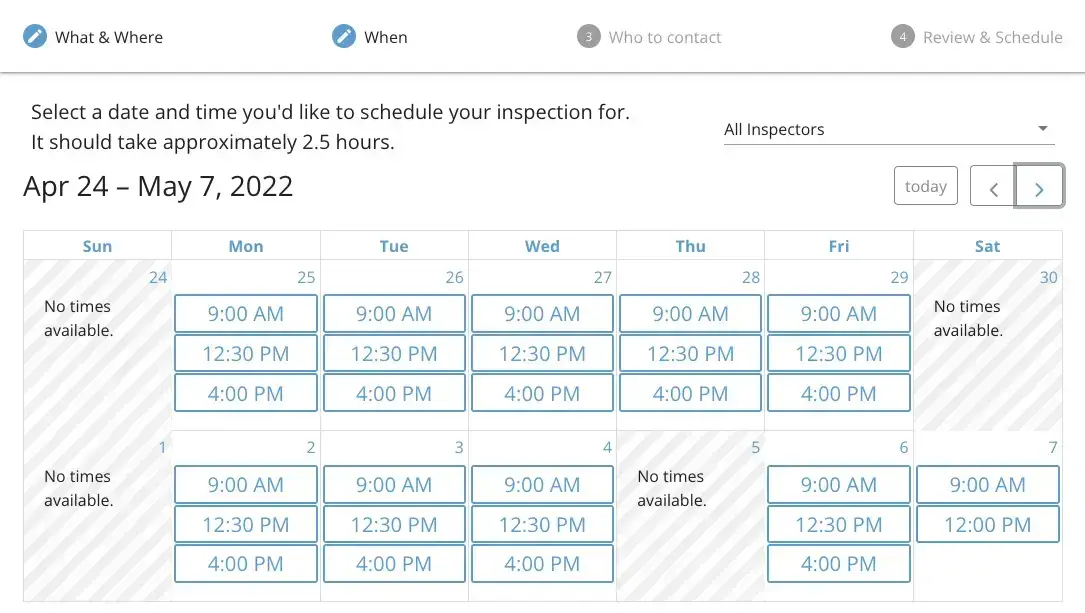
Online booking is the single biggest time-saver for most inspection businesses. When clients and agents can book directly, without calling you, you eliminate the back-and-forth that eats 15-30 minutes per inspection. Spectora's built-in inspection calendar lets you set your availability, block time off, and sync with Google Calendar so your schedule is always accurate. Automated confirmations and reminders go out to all parties without you lifting a finger, and double-bookings become a thing of the past.
Step 2: Automate Agreements and Payments
Your inspection agreement should be delivered and signed before the inspection starts, there we said it. Modern, up-to-date platforms, like Spectora let you send agreements automatically at booking, collect e-signatures, and trigger payment collection without a separate tool. Pre-inspection payment collection also eliminates the awkward payment conversation at the door and dramatically reduces no-shows.
Step 3: Standardize Your Report Templates
Inconsistency in reports is one of the biggest hidden time-wasters. If you write every report slightly differently, you are making micro-decisions on every inspection that should already be settled. A well-built template means you are checking boxes and adding photos, not writing from scratch. The narrative for "GFCI outlet missing in bathroom" should already be there, waiting for you to select it.
Step 4: Write Reports In the Field
The biggest shift for most inspectors is moving report writing into the inspection itself, rather than treating it as a separate task afterward. With a mobile-first platform, you can attach photos, select findings, and write narratives as you move through the home. Spectora's Comment Assist speeds up the process further, generating clear, buyer and agent friendly comments automatically so you're not retyping the same findings inspection after inspection. You stay fully in control, but you're starting from a professional draft instead of a blank page. Inspectors who write reports in the field deliver faster and report less burnout.
Step 5: Automate Client Follow-Up
After the inspection, your workflow should continue without you. Automated emails deliver the report, request a review, and check in with the client, no manual effort required. With Spectora Advanced, you can go further: send upsell emails when a service wasn't added, trigger payment reminders for unpaid invoices, and tailor follow-up sequences by client type. Every touchpoint runs automatically, personalized to the inspection.
"With my previous software, my average inspection was $437, and right now, my average inspection price in just two weeks of using Spectora Advanced, is $640."
Neil Perry | Indianapolis Home Inspections
Step 6: Consolidate Your Tools
Every additional tool in your stack is another login, another monthly fee, and another place for things to fall through the cracks. Platforms like Spectora replace 4-5 separate tools with a single integrated system. Data flows automatically between steps instead of requiring manual export and import.
Measuring Your Workflow Efficiency
- Time from booking to signed agreement (target: under 10 minutes, automated)
- Time from inspection end to report delivery (target: under 2 hours)
- Percentage of payments collected before inspection day (target: 90%+)
- Number of manual tasks per inspection (target: as close to zero as possible)
Frequently Asked Questions
How much time should a streamlined inspection workflow take? For a standard residential inspection, a well-optimized workflow should require about 15–20 minutes of administrative work, most of it automated. Scheduling, agreements, and payment should run on autopilot. Report delivery can happen within 1–2 hours of the inspection ending.
What is the biggest workflow improvement inspectors can make? Moving from phone-based scheduling to online booking consistently ranks as the single biggest time saver. It eliminates back-and-forth and frees up hours every week.
What tools do home inspectors use to manage their business? Most inspection businesses rely on some combination of scheduling software, e-signature tools, payment processors, and report writing platforms. The most efficient operations like Spectora, consolidate all of these into a single platform rather than managing four or five separate subscriptions and logins.
How do I collect payment before an inspection? The simplest approach is to require payment at the time of booking through your online scheduling flow. Spectora integrates scheduling and payments. It also lets you set pre-inspection payment as the default, so no manual follow-ups are needed. This also significantly reduces no-shows.
How do I reduce administrative work as a home inspector? Start by identifying every manual step between a client booking and a delivered report, phone calls, separately sent agreements, manual payment reminders, and report emails. Each of those can typically be automated or eliminated with the right platform. Most inspectors find that moving to an integrated tool cuts administrative time by 50% or more.
What is the best way to send inspection agreements? Agreements should be delivered automatically at the time of booking, before the inspector ever sets foot on the property. E-signature tools built into your scheduling platform make this seamless, the client signs digitally, and you have a record without any manual follow-up.
How do I know if my inspection workflow is efficient? Track four benchmarks: time from booking to signed agreement (target: under 10 minutes, automated), time from inspection end to report delivery (target: under 2 hours), percentage of payments collected before inspection day (target: 90% or higher), and number of manual tasks per inspection (target: as close to zero as possible).
Is it worth switching platforms to improve workflow? If your current tools require significant manual work between steps, the answer is almost certainly yes. Most inspectors who switch to an integrated platform recover the switching cost in saved time within the first month. Switching is straightforward with Spectora's express onboarding, live support, and free training library at Spectora University.
How do I write inspection reports faster? The biggest shift is moving report writing into the inspection itself rather than treating it as a separate task afterward. With a mobile-first platform, you attach photos and select findings as you move through the home. Pre-built narratives for common findings eliminate writing from scratch. Inspectors who complete reports in the field consistently deliver faster and report less end-of-day burnout.
Can I automate client follow-up after an inspection? Yes. Most modern platforms let you set up automated email sequences that deliver the report, request a review, and send a follow-up satisfaction check, all without manual effort. These touchpoints build relationships and generate referrals on autopilot.
Try Spectora free — or see how Spectora Advanced can save you time and put more money in your pocket.